Over the past year, AI calorie counting apps have flooded the App Store. The pitch is hard to resist: snap a photo of your plate, get a calorie count, skip the tedious logging. Convenience won, and millions of people downloaded them.
The trouble is accuracy. These apps are often well off the mark, and users only find out weeks later, when the weight isn’t moving and nobody can explain why. You did everything the app told you to do, and it still didn’t add up.
The reason is in how they work. From a photo, the app first has to estimate how much food is in front of it, then look up the calories for that estimated weight. The lookup is the easy half. The estimate is the problem, because without a scale there’s no reliable way to know whether that bowl of pasta is 90 grams or 160, and every calorie figure downstream inherits that error.
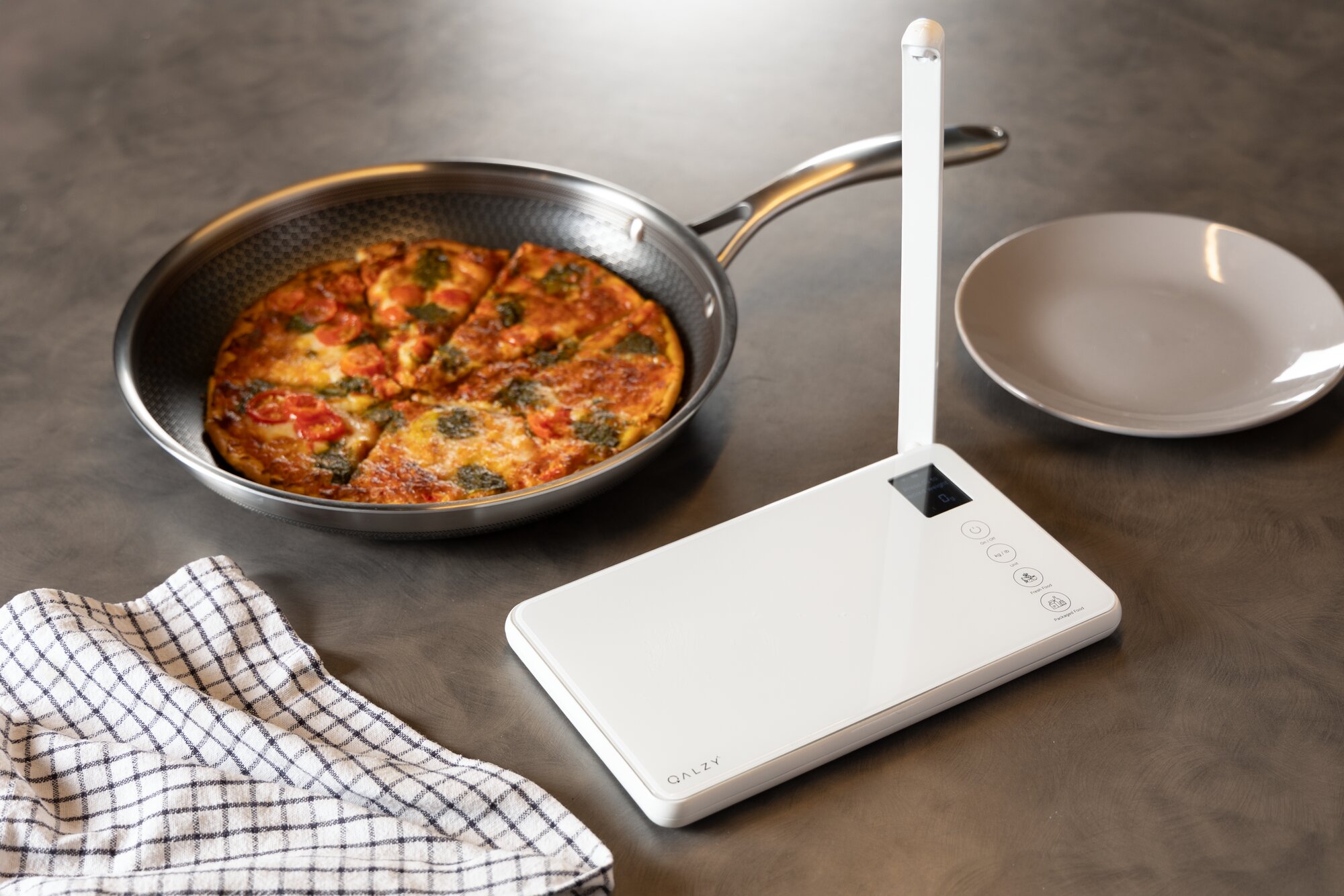
A new AI scale that’s been going viral on social media takes the guesswork out. By putting an AI camera on a kitchen scale, Qalzy identifies the food and weighs it at the same time, so the calorie count is built on an actual measurement instead of an estimate from a picture.
1. The research says their accuracy is worse than you’d think
Researchers publishing in Current Developments in Nutrition tested three leading AI models on 52 standardised food photos. The best two were off by around 36% on weight and energy. The third was wrong by as much as 64%, and worse on some measures. All of them systematically underestimated portions, and the bigger the portion, the bigger the miss (Fridolfsson et al., 2025).
Separate research presented at NUTRITION 2026 by scientists at the NIH found the same pattern in consumer apps: underestimates of roughly 250 to 345 calories per meal, about a third too low.
On a 1,800-calorie target, a third is the difference between losing weight and standing still.
Qalzy removes the guesswork. Your food goes on the scale and gets weighed to the gram before anything is logged, so the number in your diary reflects what’s actually on the plate, not an estimate from a picture.
2. It knows what the food is, so you’re not searching a database
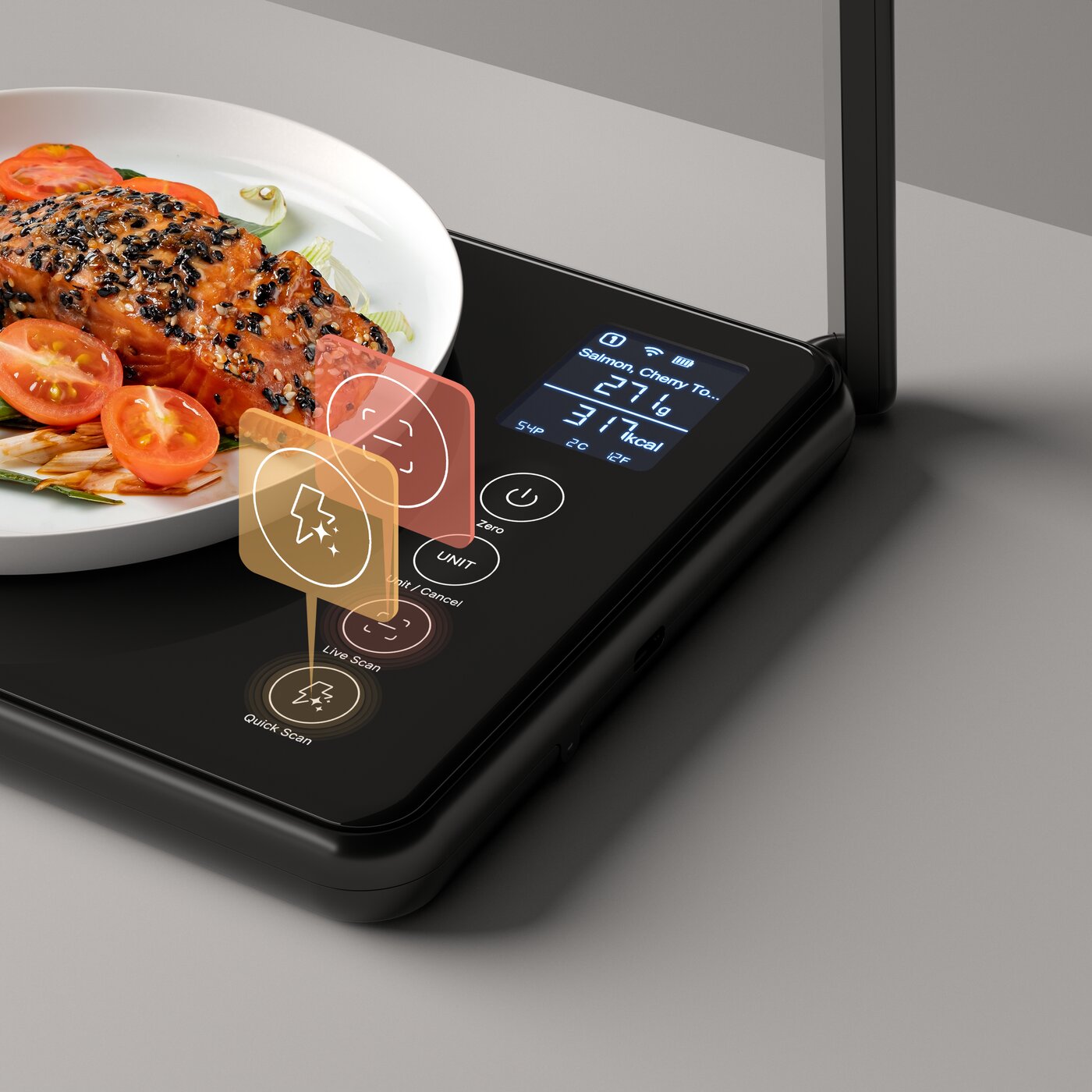
The scale has a built-in AI camera that identifies what’s in front of it: raw, cooked, packaged, even a plate with several things on it, checked against a database of 2.9 million foods.
No typing, no scrolling past fourteen versions of “chicken breast”, no deciding which one is closest to what you’re actually eating.
And it logs more than calories. Protein, carbs, and fat come with vitamins and minerals, the totals update in real time as you add ingredients to the bowl, and it counts only the edible weight, so the banana peel and the chicken bone stay out of your numbers.
3. The whole thing takes about a couple of seconds
This is the part that decides whether you’re still tracking next month. Place your food, tap once, check the output. Qalzy puts that at around two seconds per meal, roughly 10× faster than typing it into an app.
There’s nothing to set up before each meal and nothing to correct afterwards. Save a recipe once and reuse it with a single tap, and your regular breakfast becomes one press.
Two or three minutes of logging per meal is a chore you’ll eventually skip. Four seconds isn’t.
4. You can log without picking up your phone at all
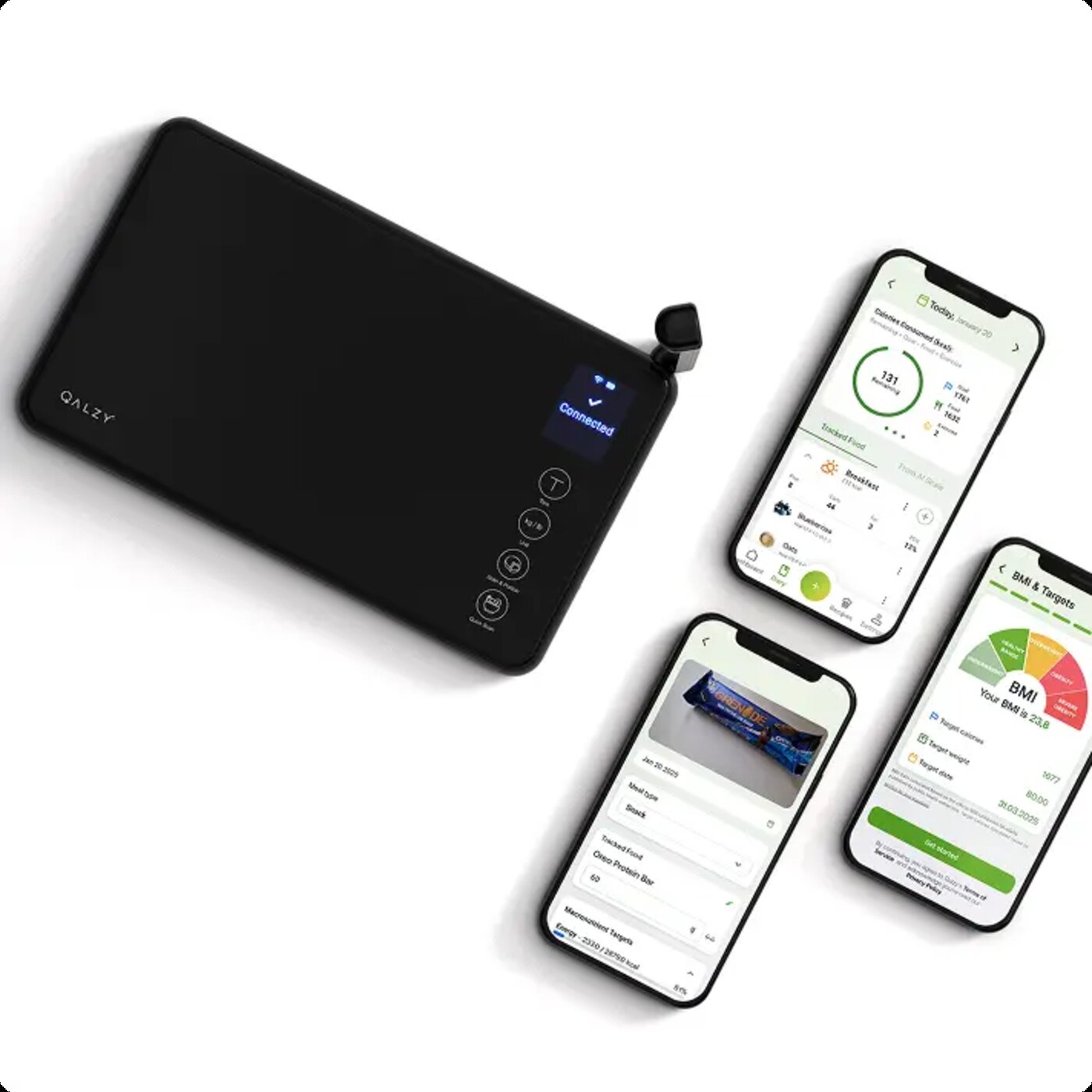
The scale connects over WiFi and works on its own, so a meal can be logged while you’re still cooking, with your hands full and your phone in another room.
Everything syncs to the free app when you want to look at it, and the app connects to Apple Health and Google Health Connect if you track elsewhere too. It supports up to nine profiles, so a household doesn’t need nine devices, and the app is free.
5. People are actually sticking with it
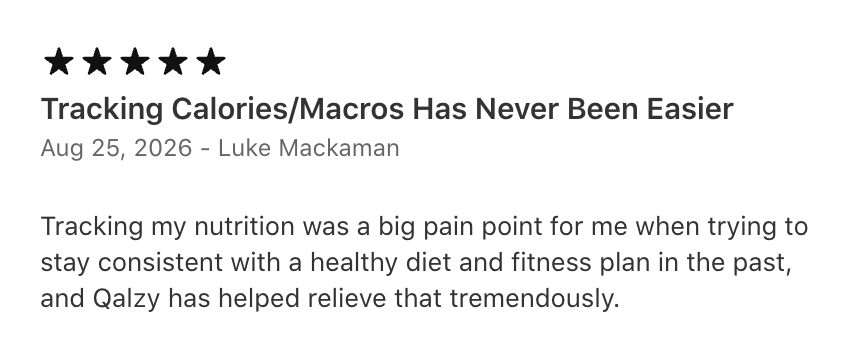
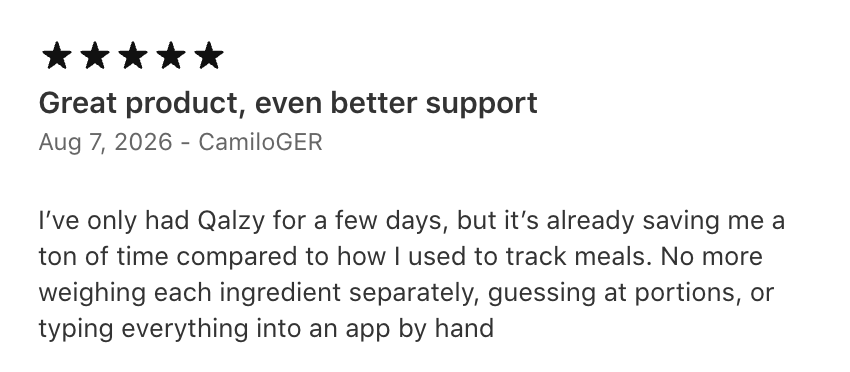
Qalzy now has a community of 435,000 members and a 4.7/5 rating from early adopters, and the pattern in the reviews is consistency rather than novelty: the tracking gets easy enough that people keep doing it.
The bottom line
If calorie tracking has never stuck for you, it’s worth asking whether the method was the problem rather than your willpower. Qalzy takes the two hardest parts, judging the portion and finding the food, and does them for you.
It comes with a 30-day money-back guarantee and a 1-year warranty, so you can test it without any risk.